
What I Cook Every Easter
Three recipes that always make it to my table — Abruzzo, Rome, Venice
Here are a few recipes that you will almost always find on my Easter table.
It’s never just this, but this part rarely changes.
Different regions, different traditions — Abruzzo, Rome, Venice — but somehow they all end up in the same kitchen.
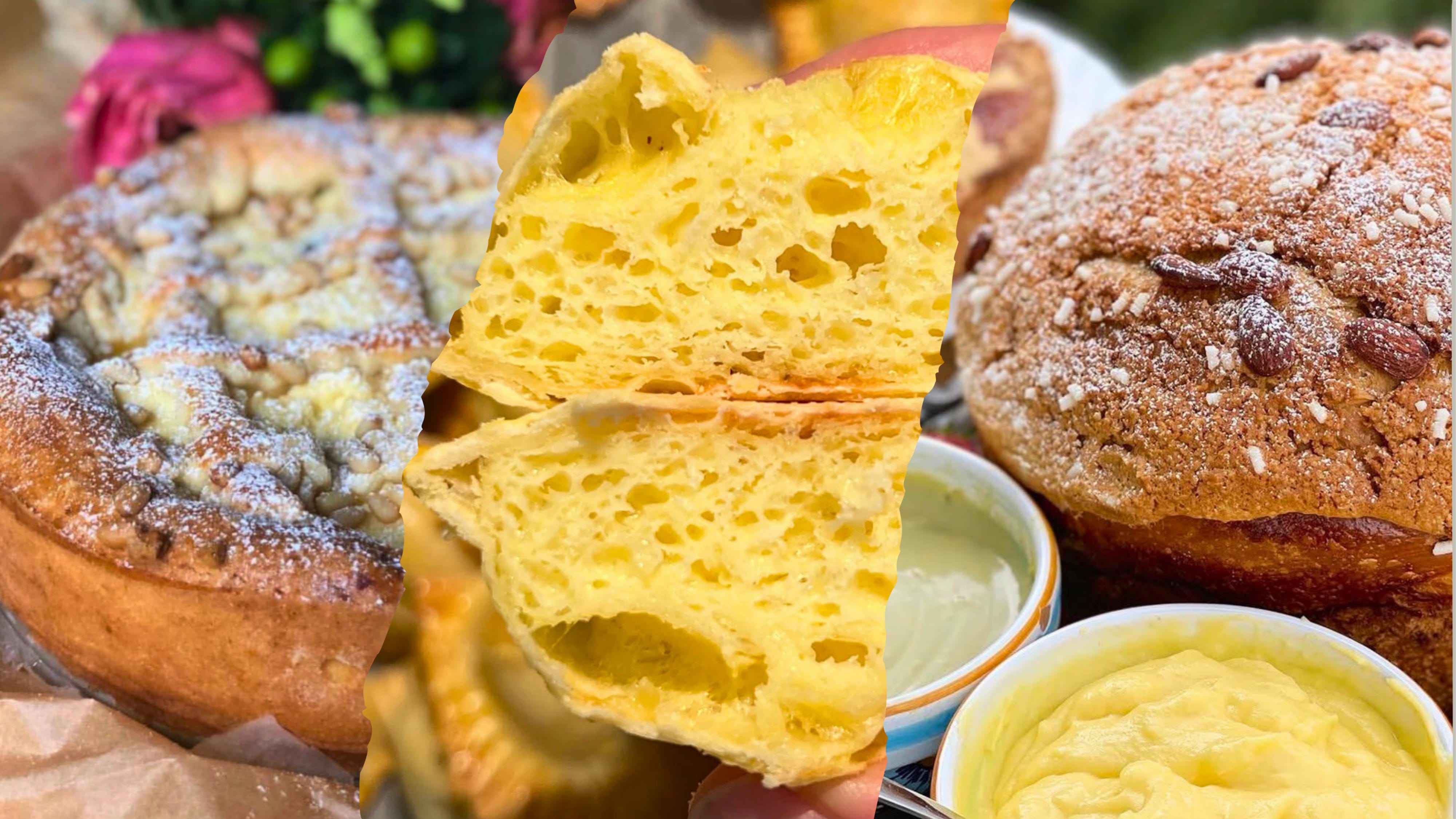
1. Fiadoni Abruzzesi
This is the first thing that disappears.
From Abruzzo, where Easter means cheese, eggs, and dough prepared in advance. They are usually made in batches, carried around, offered, shared. And eaten long before the main meal.
What you need
For the dough
500 g flour (00)
2 eggs
100 ml dry white wine
100 ml olive oil
a pinch of salt
For the filling
400 g semi-hard cheese (traditionally rigatino abruzzese)
150 g grated parmesan
150 g pecorino
4 eggs
salt, pepper
How to make them
Prepare the dough by mixing everything together until smooth and elastic. Let it rest about 30 minutes.
Grate the cheeses finely. Add eggs, salt and pepper, and mix.
Roll the dough thin (a pasta machine helps). Add small portions of filling, fold, and seal — like rustic ravioli.
Cut into half-moons, seal the edges well, and make a small cut on top.
Brush with egg yolk and bake at 180°C for about 20 minutes, until golden.
Tips
If you can’t find rigatino: use a mix of caciotta + pecorino or even young provolone. You want something firm, slightly salty, but not too sharp.
The filling should be compact, not creamy. If it’s too soft, add more grated cheese.
They are best warm, but still very good the next day.


2. La Veneziana
From Venice. Softer, lighter, more delicate.
A dough that takes time and a crust that gives just enough texture on top.
What you need
Dough
450 g flour (Manitoba if possible)
90 g butter
90 g sugar
2 eggs + 4 yolks
74 g milk
4 g salt
24 g fresh yeast
lemon zest
Almond topping
50 g sugar
50 g flour
50 g almond flour
50 g butter
40–50 g egg whites
pearl sugar + almonds
How to make it
Dissolve yeast in slightly warm milk with lemon zest.
Mix flour, sugar, eggs and milk with yeast. Then add butter and salt. Knead until smooth and elastic (10–15 minutes).
Let it rise 2–3 hours until doubled.
Shape into a ball and place in a tall mold (25–26 cm). Let it rise again until well expanded.
Prepare the topping by mixing everything except egg whites, then add them gradually until creamy.
Pipe or spread on top, add sugar and almonds.
Bake at 160°C for about 60 minutes.
Tips
If the top darkens too quickly, cover with foil.
It’s better the next day.
If you don’t have Manitoba flour, use a strong flour and knead a bit longer.


3. Ricotta Crostata (Roman Style)
From Rome. Simple structure, but very precise in flavor.
This is where ricotta really matters.


What you need
Dough
300 g flour
2 yolks + 1 egg
120 g sugar
150 g butter (soft)
lemon zest
Filling
500 g ricotta
50 g sugar
2 yolks
lemon zest
50 g cherries (from jam or fresh)
30 g pine nuts
How to make it
Mix butter, sugar and zest until creamy. Add eggs, then flour. Form a soft dough and rest it in the fridge for 30 minutes.
For the filling, strain the ricotta if needed. Mix with sugar, yolks and zest. Add cherries and pine nuts.
Roll the dough, line the mold (20–22 cm), prick the base, and add the filling.
Decorate with strips of dough.
Bake at 170°C for 35–40 minutes.
Let it cool completely before cutting.
Tips
You can replace cherries with chocolate chips or raisins.
If ricotta is too wet, always strain it first.
This cake improves after a few hours — or even the next day.


A small note
Every year I think I will simplify.
Every year I don’t.
And somehow, these are always the recipes that stay.